Bounce or Breakout: A Disciplined Framework for Separating Durable Reversals from Relief Rallies That Will Fail
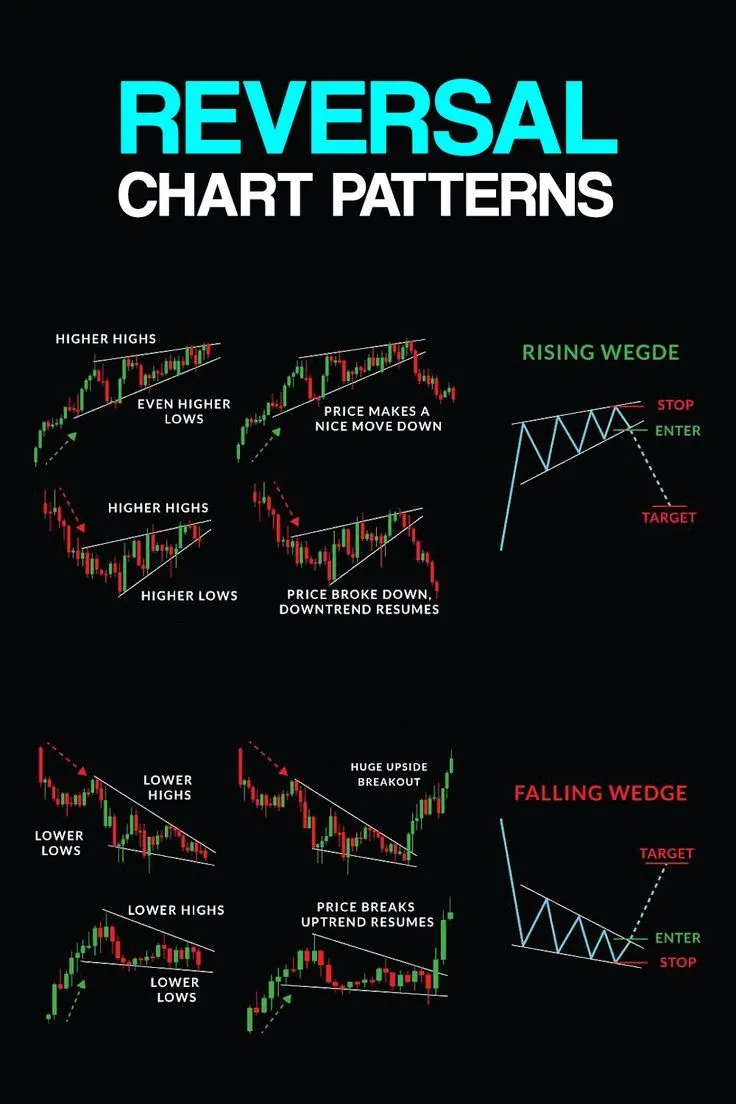
Photo: stock market reversal chart technical analysis trading, via i.pinimg.com
The contrarian trade has an appealing logic. Markets overshoot. Sentiment reaches extremes. Prices disconnect from fundamentals. The disciplined trader who fades these excesses, the argument goes, captures the inevitable correction while the crowd is still leaning the wrong way. This narrative is seductive precisely because it is partially correct — and partially correct narratives are the most dangerous kind in trading.
The problem is not that reversals do not happen. They do, with regularity. The problem is that the early stages of a genuine reversal are structurally indistinguishable from the early stages of a capitulation rally — a temporary relief bounce that exhausts itself before the underlying trend reasserts. Traders who cannot make this distinction end up fading moves that continue, holding positions through whipsaws, and accumulating losses that no individual trade would justify.
Why Capitulation Rallies Feel Like Reversals
Understanding why exhaustion bounces are so convincing requires understanding the mechanics of how they develop. In a sustained downtrend, short interest accumulates. Leveraged long positions are progressively liquidated. Sentiment surveys register elevated bearishness. By the time the market produces a sharp upward move, the conditions look textbook-perfect for a reversal: oversold indicators, extreme bearish sentiment, a price level with historical significance.
What is actually happening in many of these cases is something more mechanical. Short sellers are covering positions to lock in profits. Tactical buyers who have been waiting for a pullback are putting capital to work. Algorithmic systems are responding to technical triggers. The result is a sharp, convincing move higher that is driven not by a genuine shift in the fundamental or structural outlook but by the temporary exhaustion of near-term selling pressure.
The distinction is critical: a capitulation rally removes the marginal sellers and short-term shorts. It does not change the underlying thesis of the participants who are still structurally positioned for lower prices. When the rally exhausts itself — when the covering is complete and the tactical buyers are fully positioned — the selling pressure resumes, often more aggressively than before because the price is now higher.
Multi-Timeframe Analysis: The First Filter
The most reliable first-pass filter for distinguishing durable reversals from exhaustion bounces is multi-timeframe analysis — examining the price action across at least three time horizons and requiring coherence across them before treating a move as a genuine reversal candidate.
A bounce that appears meaningful on a fifteen-minute chart but is occurring within a well-defined downtrend on a daily chart is, by default, a countertrend move until proven otherwise. The burden of proof for a reversal trade should be high, and the evidence should be visible across multiple timeframes simultaneously.
Specifically, a reversal that is worth trading should show: a change in the character of price action on the primary trend timeframe (not just an oversold reading, but actual evidence that sellers are losing control — lower highs becoming shallower, selling pressure failing to make new lows), confirming structure on the intermediate timeframe (a higher low following the initial bounce, rather than a retest of the lows), and momentum alignment on the short-term timeframe (buying pressure that is expanding rather than contracting as the rally develops).
When these three conditions align, the probability that a bounce is the beginning of something durable increases substantially. When only one or two are present, the default assumption should be that the trend will resume.
Order Flow as a Confirmation Tool
Beyond price structure, the internal composition of a rally provides critical information about whether it is being driven by genuine demand or by the mechanical exhaustion of supply.
In a durable reversal, volume should expand as the move develops, particularly on days or sessions where price breaks above prior resistance levels. This expansion reflects new participants entering on the long side — buyers who were not already positioned and are now committing capital based on a change in their assessment of the outlook. This is fundamentally different from the volume pattern of a capitulation rally, where the highest volume typically occurs at or near the initial low (as selling is exhausted) and then progressively declines as the bounce extends.
Advanced traders who have access to time-and-sales data or Level II quotes can look for additional confirmation in the nature of the order flow itself. Genuine institutional buying tends to appear as large orders working steadily through the offer, absorbing supply without urgency. Exhaustion bounces are more often characterized by aggressive market orders from short-covering activity — fast, urgent, and self-limiting once the covering is complete.
Sentiment Extremes: Necessary But Not Sufficient
Sentiment data — whether from surveys, options positioning, fund flow reports, or social media sentiment trackers — is a necessary component of reversal analysis but is emphatically not sufficient on its own. This is the error that traps the majority of contrarian traders.
Extreme bearish sentiment tells you that the market is positioned for continued weakness. It does not tell you when the positioning will be unwound, or what catalyst will trigger that unwinding. A market can remain at extreme sentiment readings for weeks or months while price continues in the direction of the consensus. The trader who fades extreme sentiment without waiting for confirming price and order flow signals is making a timing bet with no edge.
The correct use of sentiment data in reversal analysis is as a precondition, not a trigger. When sentiment is at an extreme, the conditions for a reversal are present. When price structure and order flow begin to confirm a change in character, the trade becomes actionable. Sentiment alone is the setup; the other signals are the entry criteria.
The Retest: Where Reversals Prove Themselves
Perhaps the single most reliable differentiator between durable reversals and capitulation rallies is what happens when the initial move is retested. In a genuine reversal, the retest of the prior low — or the first significant pullback after the initial bounce — is characterized by diminishing selling pressure, declining volume, and price holding above the prior extreme. This is the market's way of confirming that the sellers who drove the prior trend are no longer in control.
In a capitulation rally, the retest typically breaks the prior low, often with renewed volume and expanding selling pressure. The bounce is revealed for what it was: a temporary interruption of the prevailing trend rather than its conclusion.
Structuring trades to wait for this retest confirmation costs some potential return — the entry will be higher than the initial low. What it provides in exchange is a dramatically improved probability that the trade is positioned with the new trend rather than against the resuming one. For most active traders, that tradeoff is well worth making.
Discipline Over Conviction
The framework described here will not catch every reversal at its origin. It is not designed to. Its purpose is to reduce the frequency of the most expensive category of contrarian trading error: being early to a reversal that is actually just a pause, and holding through the resumption of the trend that follows.
The traders who consistently profit from reversal trades are not those with the best instincts for calling bottoms. They are those with the discipline to wait for the market to confirm what they suspect — and the patience to accept that confirmation takes time.