When Your Exit Strategy Meets Reality: The Hidden Cost of Vanishing Liquidity
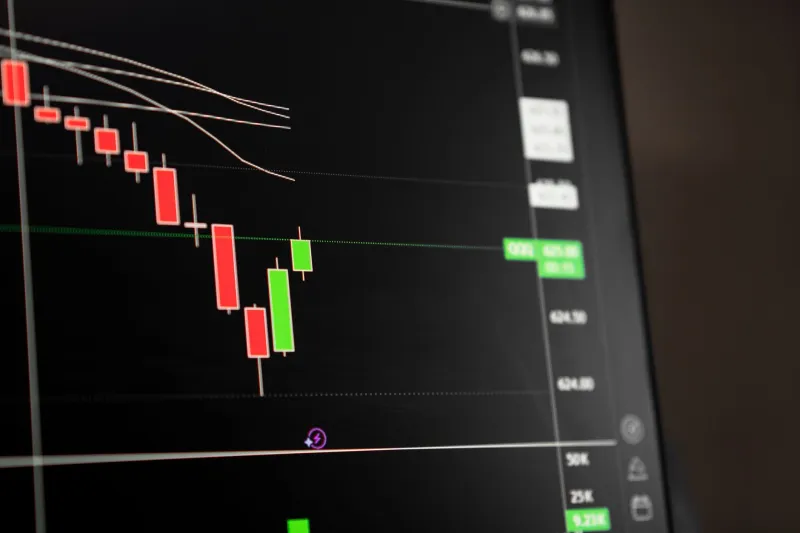
There is a particular kind of confidence that comes from having a well-constructed exit plan. You have identified your stop level, set a profit target, and mapped out the precise conditions under which you will close the position. The trade feels controlled. Measured. Professional.
Then the market moves against you — or, sometimes, sharply in your favor — and you discover that the exit you planned bears almost no resemblance to the exit you get.
This is not a failure of discipline. It is a failure of assumptions. Specifically, the assumption that the liquidity present when you entered a trade will still be present when you need to leave it.
The Architecture of False Confidence
Most retail traders develop their exit strategies by observing markets during ordinary conditions. They look at bid-ask spreads during regular hours, assess average daily volume, and conclude that exiting a position of a given size should be straightforward. That assessment is often accurate — right up until the moment it stops being accurate.
Liquidity is not a fixed characteristic of a security. It is a behavioral phenomenon driven by the willingness of market participants to stand on the other side of your trade. During calm, directional markets, that willingness is abundant. Spreads are tight, depth is visible, and orders fill efficiently. But liquidity is also deeply correlated with the very conditions that tend to trigger exit decisions in the first place.
Sharp adverse moves, macro announcements, earnings surprises, and sudden sector dislocations — the exact events most likely to send traders scrambling for the exits — are also the events most likely to cause other participants to pull their bids and offers from the market entirely. The result is a cruel paradox: the moments when you most urgently need to exit are precisely the moments when exit becomes most expensive.
Slippage Is Not a Rounding Error
Traders who have not experienced severe slippage tend to treat it as a minor operational nuisance — a few cents here, a tick or two there. This perspective changes quickly after a meaningful incident.
Consider a position in a mid-cap equity with average daily volume of roughly 800,000 shares. On a normal afternoon, the spread is tight and the market depth appears solid. Then the company issues a surprise filing after hours, and by the time the position needs to be unwound at the open, the spread has blown out to multiples of its typical width, and the visible depth in the order book is a fraction of what it was the previous session.
A planned exit at $42.50 becomes a realized exit somewhere between $40.80 and $41.30 depending on order size and timing. That is not slippage — that is a material erosion of a trade's entire expected return, and in some cases, the difference between a profitable strategy and an unprofitable one over a full year of trading.
Options traders face an even more acute version of this problem. Implied volatility spikes during dislocations can widen bid-ask spreads on options contracts to levels that make efficient execution nearly impossible, particularly in lower-volume underlyings or in strikes away from the money.
Stress-Testing Before the Stress Arrives
The solution is not to avoid trading illiquid instruments. It is to build liquidity assumptions into your exit planning with the same rigor you apply to entry criteria.
A practical starting point is to examine not just average spreads and volume, but their behavior during recent stress events. Pull up the tape on your target instrument during the last major index selloff, the last earnings cycle, or the last period of elevated VIX readings. What happened to the spread? How quickly did depth recover? Were there extended periods where the market was effectively one-sided?
This historical review will not predict the future precisely, but it will calibrate your expectations. A stock that routinely sees its spread triple during volatility events should be treated as a structurally less liquid instrument than its average-day behavior suggests.
Beyond historical review, position sizing itself becomes a liquidity management tool. A position that represents a meaningful fraction of average daily volume in a given name will almost always face worse execution during stress than a position sized well below that threshold. Sizing discipline is not only about risk management — it is also about preserving the practical ability to exit efficiently.
Building Redundancy Into the Exit Framework
Sophisticated traders do not rely on a single exit mechanism. They build redundancy into their plans the same way a sound engineering project builds redundancy into critical systems.
This means thinking through multiple exit scenarios before the trade is placed. What is the primary exit if the trade moves in your favor? What is the secondary exit if conditions deteriorate gradually? And critically — what is the contingency if liquidity collapses and neither of those exits is executable at an acceptable price?
For equity traders, contingency planning might involve using related instruments or ETFs as a partial hedge when the primary position cannot be exited cleanly. For options traders, it might mean identifying the minimum bid at which a spread can be unwound profitably and having a clear decision rule for when to hold rather than accept a destructive fill.
Time-of-day also matters more than many traders acknowledge. Liquidity in US equity markets follows a predictable intraday pattern, with the highest depth and tightest spreads typically concentrated in the first and last hours of the regular session. Exits executed during the mid-session lull — particularly in smaller names — frequently face wider spreads and thinner books than the same trade placed near the open or close.
The Discipline of Realistic Expectations
Perhaps the most underappreciated aspect of liquidity risk is the psychological dimension. When a trader has a precise exit level in mind — say, a stop at $38.00 — there is a natural tendency to treat that number as a reliable outcome. The plan says $38.00; the account will reflect $38.00.
This expectation, when violated, produces frustration and sometimes poor subsequent decision-making. Traders who understand that exit prices are estimates subject to market conditions approach execution differently. They account for a realistic execution range rather than a single point, they avoid placing oversized orders into thin markets, and they resist the impulse to chase a fill when doing so will only worsen the outcome.
Building that expectation into your strategy from the beginning — treating your exit price as a target range rather than a guarantee — creates more durable trading plans and more rational responses when markets behave as markets occasionally do.
Liquidity will always look ample until the moment you need it most. The traders who account for that reality in advance are the ones positioned to survive it when it arrives.