Held Overnight, Broken by Morning: Structuring Positions to Survive Macro Gap Events

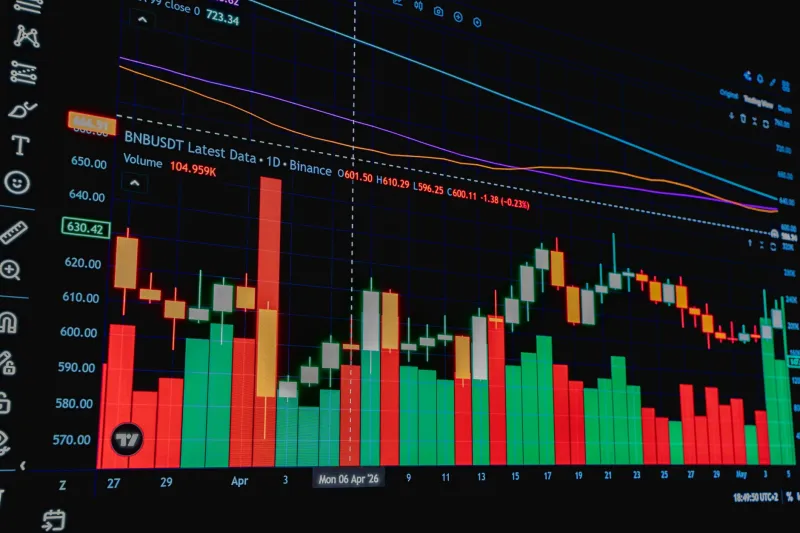
The overnight session is where many active traders discover the limits of their risk models. A position sized appropriately for intraday volatility can absorb a 2 percent adverse move without threatening the account. That same position, gapped against by 8 percent at the open following an unexpected Federal Reserve statement or a geopolitical escalation, tells an entirely different story.
Gap risk is not merely a statistical inconvenience. It is a structural feature of markets that punishes traders who conflate historical average volatility with realistic worst-case scenarios. The distinction between those two concepts is where accounts are either preserved or destroyed.
Why Standard Risk Models Fail Overnight
Most retail traders calculate position risk using daily average true range or a fixed percentage stop-loss. Both approaches share the same critical flaw: they assume the market will allow an orderly exit at or near the intended price. Overnight macro events eliminate that assumption entirely.
Consider the mechanics. You hold a long equity position with a stop-loss set 3 percent below your entry. The Federal Open Market Committee releases an unexpected policy statement at 7:00 p.m. Eastern — not during a scheduled meeting, but as an emergency communication. Futures markets gap immediately. By the time the US equity market opens the following morning, your position is trading 9 percent below your stop. Your stop-loss did not protect you. It was simply never triggered at the price you specified.
This is not a rare scenario. It has occurred repeatedly across different macro catalysts: the Swiss National Bank's franc de-peg in January 2015, the Brexit vote in June 2016, the March 2020 pandemic circuit breakers, and multiple geopolitical escalations that moved futures markets violently during off-hours. Active traders who survived those events intact either had no overnight exposure, had hedged appropriately, or were fortunate enough to be on the right side of the gap. Relying on the third option is not a strategy.
Categorizing Overnight Macro Risk
Not all overnight risk is equivalent. Structuring a hedging approach requires distinguishing between the categories of events that generate gaps:
Scheduled events with uncertain outcomes: Federal Reserve decisions, non-farm payroll releases, CPI prints, and earnings reports. These are knowable in advance. Traders can reduce position size, close exposure, or purchase options protection before the event window.
Unscheduled but probabilistically foreseeable events: Geopolitical escalations in regions already experiencing tension, central bank emergency interventions during periods of market stress, or policy announcements from the Treasury or executive branch. These cannot be predicted precisely, but elevated risk windows can be identified.
True tail events: Events with no reasonable prior probability — pandemic announcements, sudden geopolitical shocks, major financial institution failures. These cannot be hedged with precision, but portfolio-level protection strategies reduce their impact.
Effective gap risk management addresses all three categories, with the most active management applied to the first.
Stress-Testing Your Overnight Exposure
Before holding any position overnight — particularly during periods of elevated macro uncertainty — apply a structured stress test. The process is straightforward but requires intellectual honesty about realistic adverse scenarios.
Step one: Identify the macro calendar. What scheduled events occur between tonight's close and tomorrow's open? This includes US economic releases, Federal Reserve communications, and significant international central bank decisions. The CME's economic calendar and the Federal Reserve's public schedule are freely accessible.
Step two: Estimate the gap distribution. For scheduled events, look at how the relevant index or sector has historically gapped following similar releases. Options markets provide an implied move estimate that serves as a reasonable baseline. Apply a multiplier of 1.5 to 2.0 to that implied move as your adverse scenario.
Step three: Calculate dollar impact. Apply that adverse move to your full position size. If the result represents more than your predetermined maximum single-trade loss, the position is too large for an overnight hold in the current environment.
Step four: Ask whether the return justifies the exposure. If your expected overnight return — based on whatever thesis drove the position — does not reasonably compensate for the stress-tested downside, the trade may be better structured as a day trade or entered at reduced size.
Tactical Hedges That Do Not Bleed the Account
The practical challenge of overnight hedging is cost. Purchasing put options before every overnight hold is prohibitively expensive over time, particularly when implied volatility is elevated — precisely the conditions when gaps are most likely. Effective hedging requires selectivity and structural efficiency.
Index puts as portfolio-level protection: Rather than hedging each individual position, maintain a standing hedge in S&P 500 or Nasdaq-100 puts sized to cover a meaningful percentage of net long exposure. Roll these monthly and size them to cover your stress-tested worst-case scenario rather than your average expected loss. The ongoing cost is a known, manageable expense — far preferable to an unhedged gap event.
Ratio spreads for event-specific protection: When a specific macro event is scheduled, a put ratio spread on the relevant index or sector ETF can provide asymmetric downside protection at low or zero net premium. The structure involves buying one put at a higher strike and selling two puts at a lower strike. This provides protection within a defined range at minimal cost, though it introduces risk at the lower short strike level.
Futures as overnight hedges: Traders with access to equity index futures can hedge overnight equity exposure by shorting an appropriate notional amount of ES or NQ futures during the overnight session, then unwinding the hedge at the open. This approach is more precise than options but requires active management and margin capacity.
Position reduction as the simplest hedge: There is no shame in acknowledging that the most cost-efficient hedge is a smaller position. Cutting overnight size by 50 percent before a high-risk macro window and reestablishing full exposure after the event resolves is a legitimate, zero-cost risk management technique.
Calibrating to the Volatility Environment
Gap risk management is not static. During low-volatility regimes — when the VIX is trading below 15 and macro uncertainty appears contained — overnight positions in diversified portfolios carry relatively modest gap risk. During elevated-volatility environments, the calculus shifts dramatically.
Develop the discipline to reassess your overnight exposure framework each time the volatility regime changes. The trader who manages overnight risk identically in a VIX-12 environment and a VIX-28 environment is not applying a strategy — they are applying a habit. Habits do not survive macro shocks. Frameworks do.